Omaha planning guide
Portable Handwashing Stations for Food, Work, and Outdoor Activities
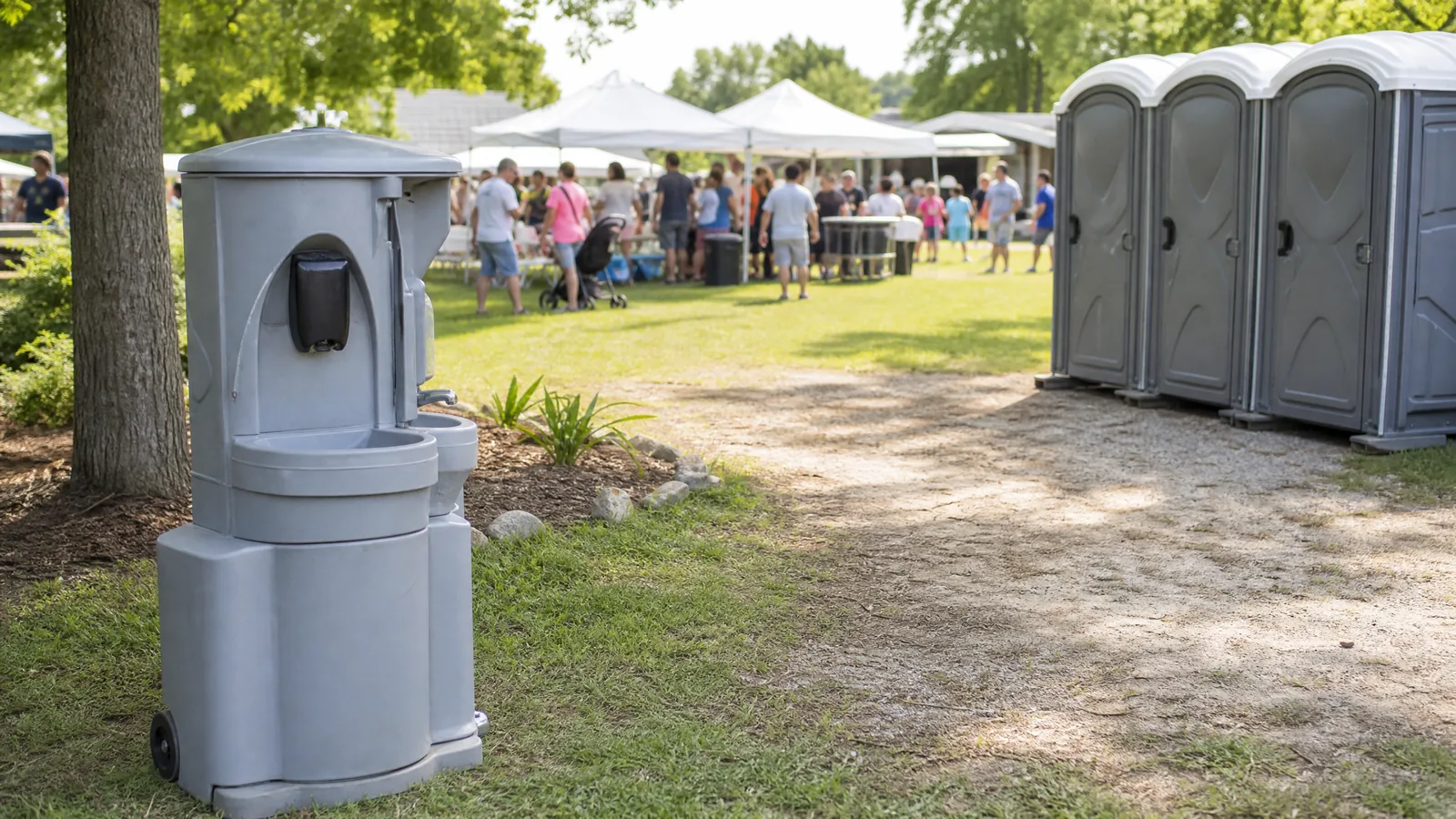
Food and beverage service is the obvious example, but it is not the only one. Children’s activities, shared equipment, craft areas, gardening, dusty work, and public gatherings can all benefit from a visible washing point. Keep it near—but not inside—the service queue, and avoid forcing users to cross vehicle lanes or crowd a doorway.
Protect circulation and access
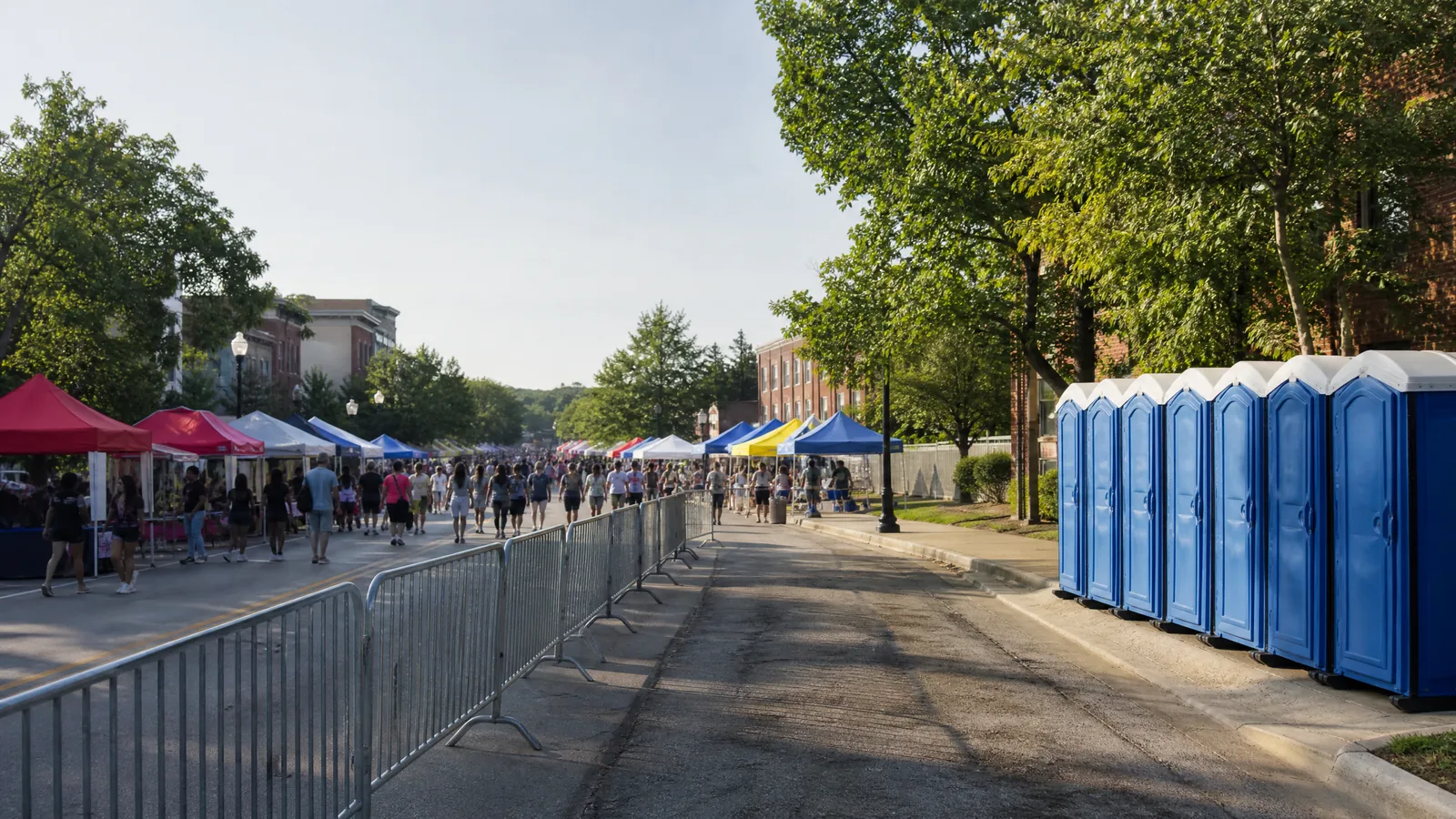
The station should sit on a stable surface with enough room for approach and use. Do not place it where runoff can create mud, where hoses or supplies become trip hazards, or where a line blocks an accessible route. At a large event, coordinate its position with restrooms, trash collection, food vendors, and the main pedestrian flow.
Match the amenity to the schedule
Tell the planner the event or project dates, expected users, food-service arrangement, and site surface. A short family gathering has different needs from a multi-day festival or long construction phase. If the site is weather-exposed, plan for shade, cold, wind, and ground conditions rather than assuming a one-size-fits-all placement.
Frequently asked questions
Where should a handwashing station go?
Place it near food, beverage, children’s, or high-touch activity areas while keeping entrances, queues, and accessible routes clear. The surface should be stable and the location should not create a runoff or trip problem.
Is a handwashing station a substitute for a restroom?
No. It is a complementary hygiene amenity, not a restroom facility. Plan both based on the event or worksite’s users, duration, layout, and applicable requirements.
Talk through the site
Share your use, dates, access route, surface conditions, and priorities. This form opens your email app with a prefilled message.
For a site-specific rental quote, call (402) 226-5410. Share the location, rental dates, expected users, and any access details when you call.